Blog
A Woman's Place during the Second World War
Throughout the 1920s and 1930s, the British and Northern Irish governments had been pushing the concept that a woman’s work was not as important as a man’s.
The social dislocation of the First World War and the economic circumstances of the inter-war period all led to this concept. Jobs were hard to come by, so they should naturally go to men. After the Great War, women were subtly told to return to their ‘proper place’. The campaign for suffrage had won women the vote, but they were still relegated to the ideal of domesticity. It was not deemed necessary for women to have employable skills, as it was considered inevitable that they would get married and then withdraw from paid work. In Northern Ireland and the Irish Free State, there were marriage bars in many professions, meaning that many educated women had to give up working once they got married. Married women were also not entitled to any unemployment benefits.
When war broke out in 1939, however, women were once more needed for the workforce. The exceptional circumstances of war provided a way to encourage women into the workforce while, at the same time, avoiding undermining the messaging of previous decades.

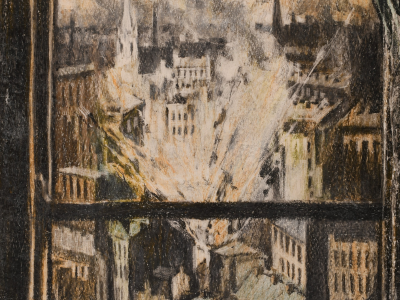
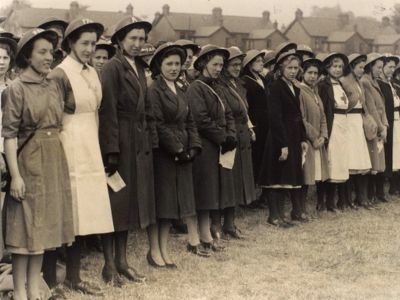
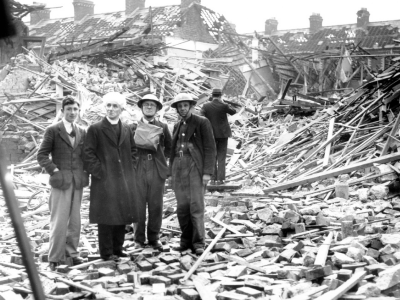
Women were expected to want nothing more than to be a housewife and mother, so many who had taken on these roles had little opportunity to suddenly abandon them in wartime. Volunteering was advertised to these women as a way to contribute to the war effort while remaining within their proper sphere. Women, as well as men, volunteered for organisations such as Air Raid Precautions, the Red Cross, and the Auxiliary Fire Service. Such work was vital in spring 1941 when German bombs rained on Belfast. Realising that ordinary women could provide a wide network of able volunteers, the Women’s Voluntary Service for Civil Defence began offering training in first aid, nursing and air raid precautions. The Housewives’ Section was organised street by street, and cards were sent out to the Housewives to place in their front windows - blue indicated a woman within who was trained to give assistance, and red indicated a street leader.

Special broadcasts for housewives were produced in 1940 and compiled into a booklet titled “Hints for Housewives ARP”. A copy of this booklet is held by the NI War Memorial, and along with the practical information on bombs, gas, shelters and first aid, it contains general advice for women.
“Don’t lose your sense of proportion. Keep cheerful yourself, and keep others cheerful too. A long face does not help anyone, but a cheerful face always makes the day seem brighter”.

While women performed a wide range of roles within the Housewives’ Sections, most of these roles were aligned with traditional ‘feminine’ duties. Providing housing, food and hot drinks, looking after children, providing washing facilities, collecting clothing, and growing vegetables were all ways in which already busy housewives could help the war effort at home. A few of these women were called on directly when Belfast was attacked.

To deal with the ‘refugees’ from Belfast in Coleraine, Mary Hinchliff remembered being called on to help by her mother, who was a leader in the WVS.
‘The local Girl Guides were brought in to help make beds, peel vegetables or do other jobs. My sister and I were set to wash dozens of babies’ bottles - the first time I had ever seen green/brown Guinness/beer bottles used for this purpose with a teat on the end!’
Warden Martha Allister went with a friend after the Fire Raid in Belfast on 4-5 May to help her salvage any belongings. An unexploded bomb in the house next door detonated, killing all the occupants and destroying both houses. Martha was 48 when she died - one of many women killed in Belfast as a result of the attacks.
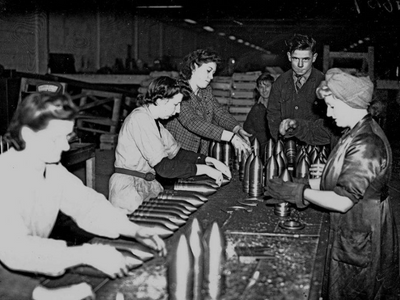
Of course, working-class women were accustomed to working outside the home to supplement the family’s income, and Northern Ireland offered many opportunities for women in mills and factories. During the war, women continued in these jobs and also took on jobs in male-dominated fields. Munitions production was vitally important, and trade unionist Betty Sinclair called on Ulster women in 1942 to;
‘Man the factories of our country for increased production, for the opening of a Second Front in Europe, for the strengthening of the alliance of working women the whole world over, for a speedy victory, and the utter destruction of Hitler and all brands of fascism.’
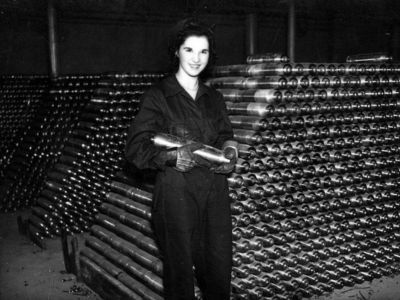
Women took on jobs in engineering, the aircraft industry and ropemaking. To facilitate this work, day nurseries for young children were opened, allowing mothers to work shifts in factories.
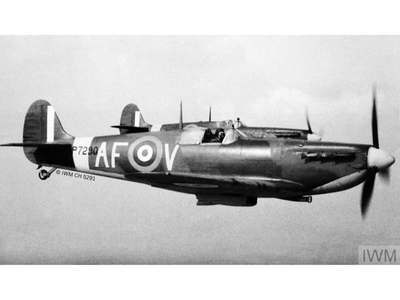
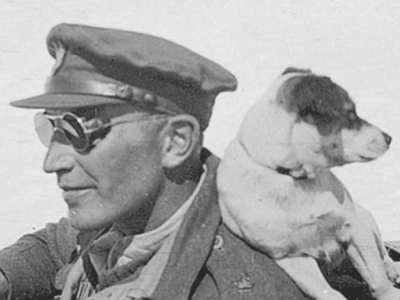
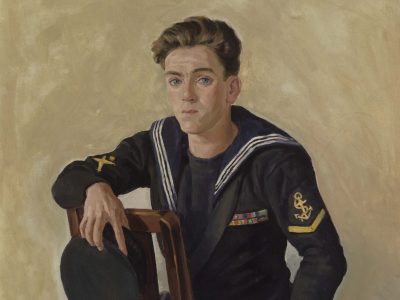
For some (mostly unmarried) women, the war brought a wider range of opportunities. Women’s auxiliaries to the armed forces were established or revived, requiring women to fulfil certain roles to free up men. The Women’s Royal Naval Service, or Wrens, was revived in 1939 with a plethora of different roles for women - clerks, cooks, electricians, mechanics, and weapons analysts. The Auxiliary Territorial Service, the women’s branch of the army, had similar occupations for women. In the Women’s Auxiliary Air Force, WAAFs took on the male-dominated roles on the ground. One woman who didn’t keep her feet on the ground was Mabel Glass from Whitehead, who had obtained a flying license in 1934. She became one of the first women to fly RAF planes, transporting Spitfires and Hawker Hurricanes throughout the war. After the war, she relocated with her mother and sister to South Africa, where she competed in (and won) aviation races until her death in 1967.

As the war was coming to an end, there was real concern that the WAAFs in NI would not easily transition back to the women’s roles society approved of. Historian Myrtle Hill found Cabinet papers that show how big a concern this was for those in power. They brought in training courses for WAAFs in ‘housecraft’, teaching them how to cook, shop and clean.
‘This domesticity, apart from being valuable training, was a great change from their Air Force work and the courses were always most popular.’
Headquarters also had a white satin wedding dress, which many WAAF brides used as the war was coming to an end. This reinforced their post-war duties.

Once again, after peace was declared, women were expected to go back to normal. Strong societal pressure was placed on women to step back from the roles and duties they had taken on during the war. They were urged to go back to being housewives and mothers and to be content with their lot. But the war had given some of these women a glimpse of something more…
About the author
Dr Robyn Atcheson is a social historian and history communicator who specialises in the histories of the marginalised in Irish history. Her research focuses on the poor of Belfast, public health in Ulster and the history of women across the eighteenth to twentieth centuries.
Further Reading
Brian Barton, Northern Ireland in the Second World War (Belfast: Ulster Historical Foundation, 1995).
Myrtle Hill, Women in Ireland: a century of change (Belfast: Blackstaff Press, 2003).
Mary Muldowney, ‘Women workers in Dublin and Belfast during the Second World War’ in Alan Hayes and Diane Urquhart (eds) Irish Women’s History (Dublin: Irish Academic Press, 2004), pp 168 - 186.
BBC, ‘The Women’s Voluntary Service (WVS) in WWII’ WW2 People’s War